
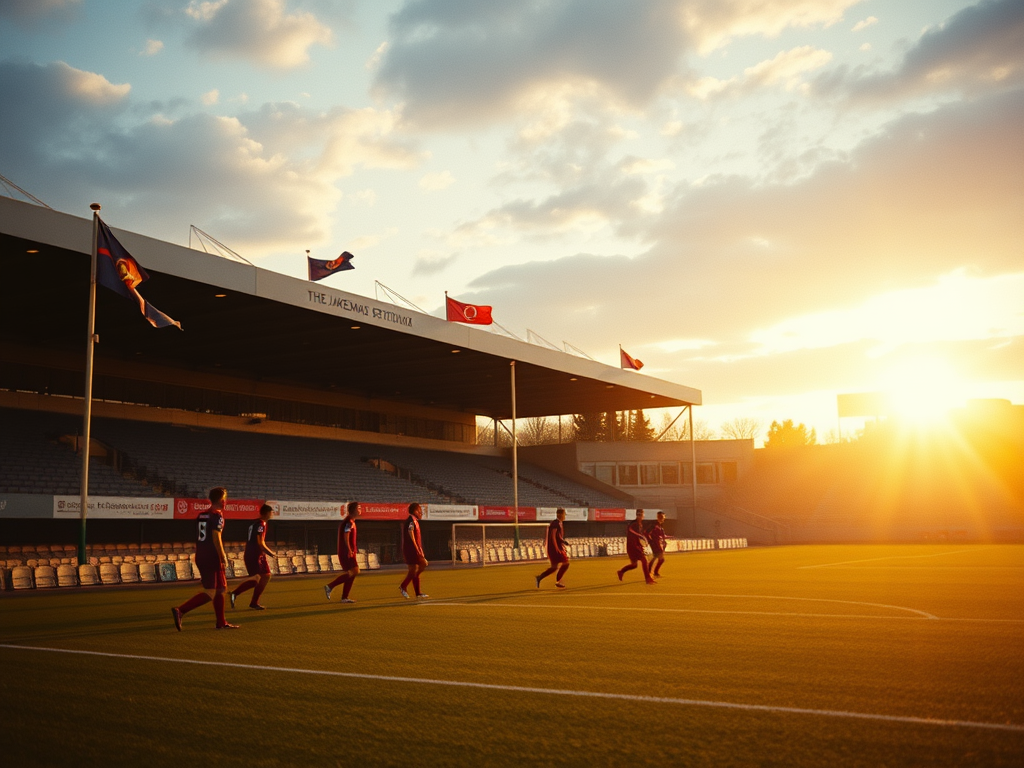
Fine-Tuning Boston United's Midfield Dynamics for Greater Control
As Boston United continues to navigate the challenges of the National League, recent performances have shown promise, yet also highlighted areas ripe for tactical refinement. The Pilgrims have demonstrated an impressive ability to adapt to various opponents, but enhancing their midfield dynamics could be crucial for achieving greater control and consistency on the pitch.
One of the standout aspects of Boston United's recent play has been their willingness to press high and disrupt the opposition's flow. However, this high-pressing strategy can sometimes leave gaps in midfield, particularly when the opposition bypasses the forwards. To address this, a more structured approach to the midfield trio could help maintain possession and provide better defensive cover. By adjusting to a double pivot system, with two holding midfielders instead of one, Boston can solidify their central areas, making it more difficult for opponents to penetrate through the middle.
Additionally, the introduction of a more fluid attacking midfielder could inject creativity into the side. Currently, the midfield often relies on wide players to create chances, but a player who can drift between the lines and link up with both the forwards and wide men would provide a greater threat. This alteration could also help in countering teams that sit deep, as it would allow for more intricate passing in tight spaces.
Let's consider the roles of players like G. Sloggett and D. Hill, whose performances have been integral. Implementing a more dynamic relationship between them-where one can push forward while the other sits back-could lead to more effective transitions. Moreover, encouraging midfielders to make late runs into the box could catch defenders off guard, adding another layer to Boston's attacking play.
Defensively, the need for a compact shape when the team loses possession has become ever more critical. A concerted effort to ensure that the midfielders drop back quickly to form a solid line of four in front of the defence can thwart counter-attacks, a tactic that has become prevalent in modern football. This could be achieved by instilling a mindset of immediate recovery upon losing the ball, ensuring that the players understand the importance of maintaining their shape even in the heat of the game.
Furthermore, communication is key. Midfielders must constantly talk and adjust their positioning relative to one another as well as to the forwards and defenders. Enhancing on-pitch communication will allow for better anticipation of each other's movements and facilitate a quicker transition between defence and attack.
In terms of player rotation, Boston United could benefit from experimenting with fresh legs in the midfield during matches. Substituting players who can maintain the same level of intensity will help keep the midfield dynamic and reduce fatigue, particularly in high-tempo encounters. This strategy not only keeps the starting XI on their toes but also allows for a greater pool of talent to emerge when required.
In conclusion, while Boston United's recent form has been commendable, the potential tactical tweaks in midfield could elevate their game to the next level. By instituting a double pivot, fostering creativity through an attacking midfielder, focusing on defensive shape, and encouraging robust communication, The Pilgrims can enhance their control over matches, leading to a more successful campaign in the National League.